How to Build and Monetize an IPTV Streaming App in 2026
Introduction
Global IPTV subscribers are on track to hit roughly 398 million by the end of 2026 — the point at which, for the first time, IP-based television delivery overtakes traditional cable subscriptions worldwide. The market itself is growing at a compound annual rate of roughly 15–17% a year, and ad-supported streaming (AVOD) is now the fastest-growing revenue segment across North America, up 32% year over year. In plain terms: this is not a shrinking niche you're arriving late to. It's one of the few media segments still in genuine expansion, and there's real room for a well-built, well-monetized app.
I've spent the last 10+ years building Flutter and full-stack products, including several IPTV and streaming apps of my own (Azul TV Player and StarBox IPTV among them), so this guide is written from direct build experience — not just theory. But the goal here isn't to sell you a specific stack. It's to walk through the real decisions — architecture, streaming protocols, content sourcing, and monetization — that determine whether an IPTV app actually turns a profit or quietly burns through hosting costs for a year before anyone notices it's not working.
1. Build vs. Buy: Picking Your Starting Point
Before touching code, decide which of three realistic paths fits your budget, timeline, and risk tolerance:
- Build fully custom. Full control over every feature and the codebase, but expect 3–6 months of development for a production-ready app across mobile and TV, plus ongoing maintenance overhead. Makes sense if you're differentiating on a unique feature set or plan to scale into a large, distinct product.
- Start from an open-source or white-label base and customize. Faster to market (days to a few weeks), lower upfront cost, but you're inheriting someone else's architectural decisions and need to budget time for rebranding, backend hookup, and app-store compliance review.
- License an existing panel/reseller system. Fastest option if you're focused purely on the business side (content deals, marketing, support) rather than the technical build. Trade-off is less differentiation and more dependency on the vendor's roadmap.
None of these is objectively "correct" — the right call depends on whether your edge is technical (build custom), operational (buy and focus on content/marketing), or somewhere in between (customize a base).
2. Core Technical Architecture
Whichever path you choose, a modern IPTV app is built from the same core pieces:
- Client app: Flutter is the most common choice for IPTV apps today because a single codebase targets Android, iOS, Android TV, Fire TV, and web with native-level performance — important when your audience is split across phones and living-room devices.
- Backend: Node.js, or a managed Postgres backend like Supabase or Firebase, handles user accounts, subscription state, stream-source metadata, and admin operations. Supabase specifically gives you Postgres, auth, and storage in one place, which shortens backend setup considerably versus rolling your own.
- Admin panel: A React (or similar) dashboard for managing channels, categories, streaming sources, and users, plus basic analytics (active users, stream health, churn).
- Push notifications: Firebase Cloud Messaging for re-engagement (new content alerts, renewal reminders) — a meaningful lever for reducing churn in subscription models.
3. Streaming Protocol and Delivery: The Part Most Guides Skip
This is where IPTV apps actually succeed or fail on user experience. Two protocol families dominate:
- M3U / Xtream Codes: The most common format for IPTV playlists and provider integrations. Xtream Codes specifically exposes a REST-like API (username, password, and server URL) that returns live channel lists, VOD, and series — it's become a de facto standard among IPTV resellers, which is why "Xtream login" support is table stakes for any competitive app in 2026.
- Adaptive Bitrate Streaming (HLS and DASH): Rather than serving one fixed video quality, ABR encodes each stream at multiple bitrates and lets the player switch in real time based on the viewer's actual bandwidth. HLS (Apple's format, .m3u8 playlists segmenting video into short .ts chunks) is the most widely supported across mobile and TV platforms; DASH is the open, codec-agnostic alternative with wider adoption on web and Android TV. Supporting both, or at minimum HLS with graceful fallback, is what separates an app that buffers constantly on mobile data from one that doesn't.
Practically, this means your player layer needs quality-selection UI (SD/HD/FullHD), buffering/retry logic, and ideally per-user CDN-backed delivery rather than serving streams directly from a single origin server — a single VPS will not hold up once you have more than a handful of concurrent viewers on a live channel.
4. Content Acquisition and Licensing
This is the part that determines whether your app is a legitimate business or a legal liability, and it's the one section most "how to build an IPTV app" guides skip entirely. Three realistic sourcing paths exist:
- Licensed content deals with broadcasters or aggregators — the only fully compliant path if you're distributing premium/branded channels, but requires real licensing negotiation and budget.
- Reselling from an existing, licensed IPTV provider under a reseller/white-label agreement — common in the Xtream-Codes ecosystem, and viable as long as the upstream provider's content rights are legitimate.
- Free-to-air or public-domain content aggregation — lower risk, lower revenue ceiling, often used to seed a free/ad-supported tier before adding paid premium content.
Whichever path you take, don't treat this as an afterthought once the app is built — app-store review teams (Apple in particular) have tightened enforcement around unlicensed streaming apps, and it's far cheaper to sort out content rights before launch than to have an app pulled after you've acquired users.
5. Monetization Models Compared
Industry-wide, hybrid monetization has become the default rather than the exception: global OTT ad revenue reached roughly $84 billion in 2025, up 31% year over year, and is projected to cross $110 billion by the end of 2026, with ad-supported tiers now the fastest-growing segment even on platforms that started as pure subscription services (Netflix's ad-supported tier alone reportedly reached around 40% of its active US accounts by Q3 2025). For an IPTV app specifically, here's how the models compare in practice:
- AVOD (ad-supported, free to watch): Lowest barrier to entry for users — maximizes install and watch-time volume, monetized via AdMob/Unity Ads or direct ad placements between streams. Works best as your top-of-funnel tier, but per-user revenue is low, so you need real scale for it to matter on its own.
- SVOD (flat subscription): Predictable recurring revenue and the easiest to forecast, but requires enough exclusive or hard-to-find content that users won't churn to a competitor or a free alternative. Best suited once you have a differentiated content library.
- TVOD (pay-per-view / rental): Works well for live sports events or premium one-off content, less so as a primary model for a general entertainment catalog since it creates friction on every purchase decision.
- Hybrid (free ad-supported tier + paid ad-free/premium tier): The model most competitive IPTV and streaming apps converge on in 2026 — a free AVOD tier for acquisition and volume, with a paid tier removing ads and unlocking premium channels or higher stream quality. This mirrors the exact shift the broader streaming industry has made over the past two years, and it's the safest default if you're unsure which single model to commit to.
- Reseller/affiliate access: Selling Xtream Codes access or bundled playlists to resellers is a legitimate secondary revenue stream if your backend already supports multi-tenant access control, but it depends heavily on the legitimacy of your upstream content sourcing (see Section 4).
6. Must-Have Features for a Competitive 2026 App
- Xtream Codes login (username, password, server URL) and M3U playlist import
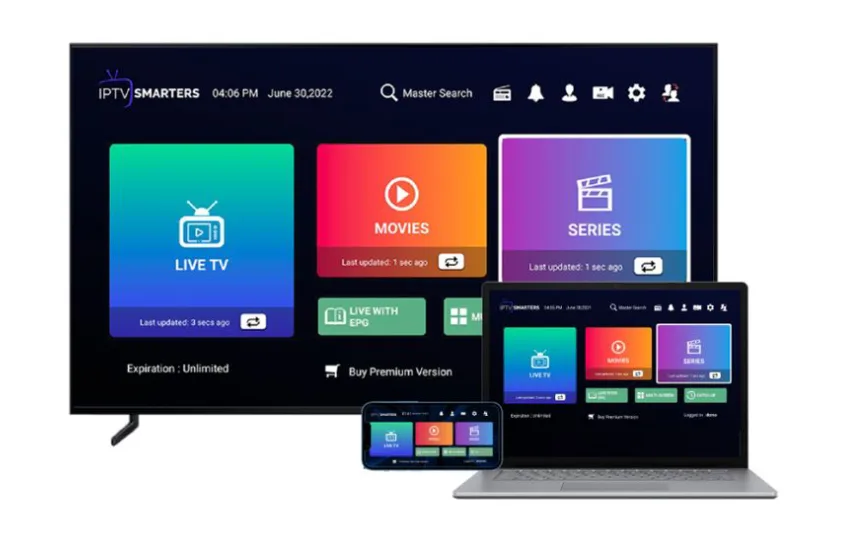
- Live TV, VOD, and series categories with EPG (Electronic Program Guide) integration
- Favorites, watch history, and multi-profile support
- Search and filtering — genuinely important once a catalog passes a few hundred channels
- Stream quality selection, Chromecast/AirPlay, and background playback
- Dark mode and multi-language UI, since IPTV audiences skew heavily international
- Push notifications for new content and renewal/expiration reminders
7. Hosting and Scaling
A single VPS is fine for development and early testing but will not hold up under real concurrent-stream load. For production:
- Put a CDN (Cloudflare or similar) in front of stream delivery rather than serving directly from origin — this is the single highest-leverage infrastructure decision for stream stability.
- Use managed Postgres/storage (Supabase or Firebase) for metadata, user accounts, and images rather than self-managing a database server, unless you have a specific reason not to.
- Set up basic uptime monitoring on your stream sources specifically — IPTV sources go down far more often than typical web infrastructure, and users churn fast when a channel just doesn't load.
- Use CI/CD (GitHub Actions or similar) so app and backend updates ship without manual server access every time.
8. If You'd Rather Not Build From Zero
If the custom-build path above is more time than you want to invest, starting from an existing, working codebase is a reasonable middle ground — it skips months of the architecture and player-integration work in Sections 2–3 while still leaving you in control of branding, content sourcing, and monetization. I maintain a couple of ready-made options along these lines — Azul TV Player and StarBox IPTV — both with Xtream Codes/M3U support and an admin panel already wired up, if you want to see what a finished version of this architecture looks like in practice.
Conclusion
The technical bar for a competent IPTV app is well understood at this point — Flutter front end, Xtream/M3U + HLS-or-DASH playback, a managed backend, and a hybrid monetization model are close to a default recipe in 2026. The real differentiation, and the real risk, sits in Sections 4 and 5: where your content actually comes from, and whether your monetization plan matches how your specific audience already pays for streaming. Get the architecture right and skip the content-licensing conversation, and you'll have a technically solid app with no sustainable business behind it. Get both right, and you're building into a market that's still genuinely growing.

.webp)
.webp)