Why You Need to Use AI in Your Football Application

Where AI Genuinely Adds Value in a Football App
"Add AI" is thrown around loosely in app pitches, so it's worth being specific about where machine learning features actually improve a football app versus where they're just a buzzword on a feature list.
Match Outcome Predictions
Predictive models trained on historical results, current form, head-to-head record, and (where available) player-level data can generate a genuine win/draw/loss probability rather than a gut-feel guess. The honest caveat: football is a low-scoring, high-variance sport, so prediction accuracy has a real ceiling — the value isn't "certainty," it's giving fans a data-backed reference point they can compare against their own expectations, which is itself a meaningful engagement feature.
Personalized Content Ranking
Rather than a single global feed of news and highlights, a model that learns which teams and competitions a specific user actually engages with can reorder content per-user — surfacing their followed teams' news above generic global headlines. This is a more tractable, lower-risk AI application than prediction: it's a ranking problem with clear engagement signals (opens, time spent) to train against, and it degrades gracefully (worst case, it's just a slightly worse-ordered feed, not a wrong "fact").
Automated Match Summaries
Generating a readable text summary of a match from structured event data (goals, cards, substitutions, possession stats) as soon as the final whistle blows is a genuinely practical use of language models — it gives every match a written recap instantly, including lower-tier matches that would never get manual editorial coverage. The key implementation detail: ground the summary strictly in the structured match data you actually have, rather than letting the model add color commentary it can't verify, to avoid generating plausible-sounding but incorrect claims about the match.
Where to Be Skeptical
- "AI-powered insights" with no clear input data. If there's no real historical dataset behind a prediction or insight feature, it's not actually AI-driven — be wary of features described this way without a clear data source.
- Chatbot-style Q&A about live matches. Interesting as a novelty, but real-time match state changes faster than most retrieval pipelines can stay current with, so accuracy risk is high for anything time-sensitive.
Implementation Approach
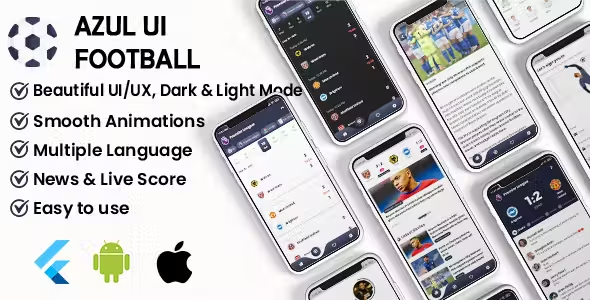
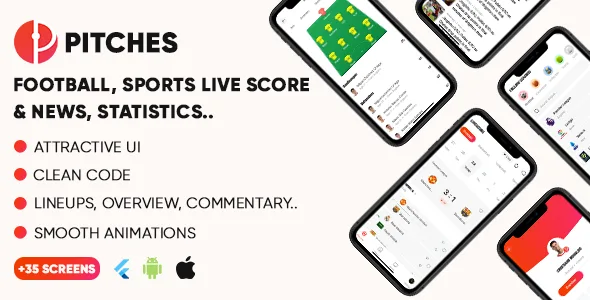
For a Flutter-based football app, AI features typically live server-side (a Node.js or Python service handling predictions/summaries) with the mobile app simply displaying the results — you're not running ML inference on-device for this kind of feature. The app's job is fetching and displaying the model's output alongside your regular match data, which keeps the mobile client simple regardless of how sophisticated the backend prediction logic becomes.
Conclusion
The AI features worth building are the ones grounded in real structured data you already have — predictions from historical results, personalized content ranking from engagement signals, and summaries generated strictly from match events. Skip anything marketed as "AI" that can't point to a concrete data source behind it.